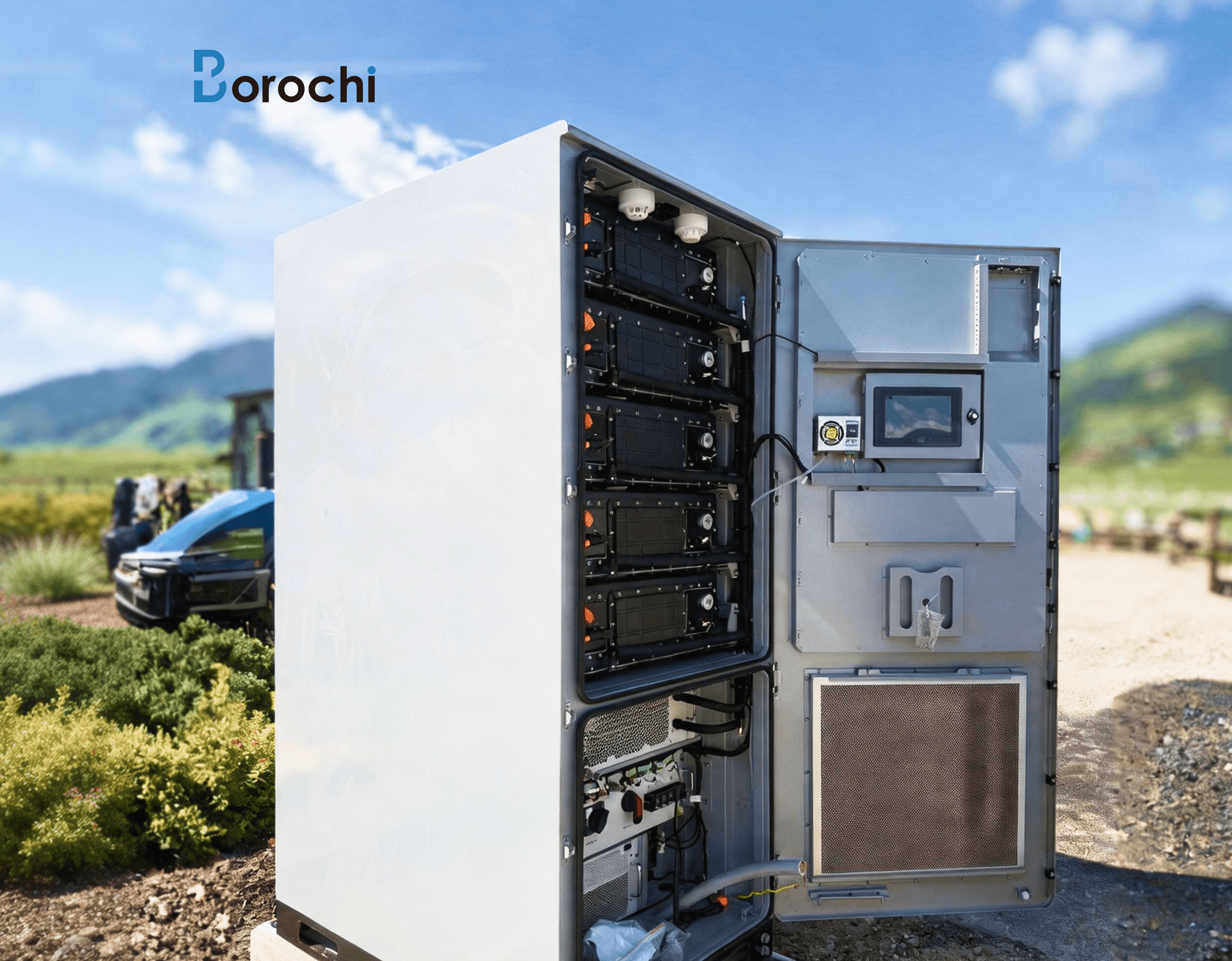
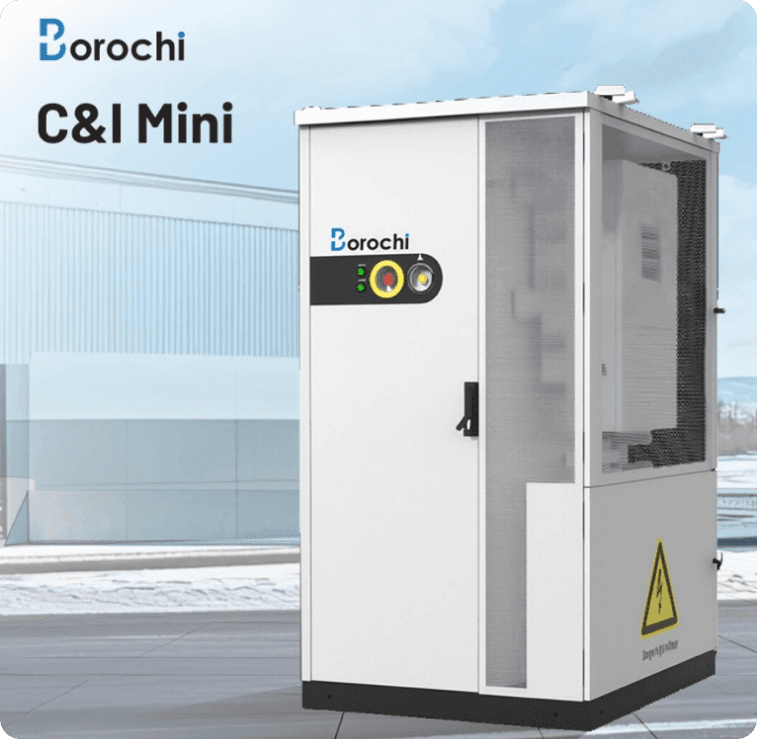
Borochi commercial and industrial energy storage is suitable for hotels, factories, office buildings, warehouses, business parks and charging stations. It can also be deployed alongside solar farms or as a standalone storage project. Depending on the project, it can increase solar self-consumption, reduce peak grid demand, optimise charging around dynamic electricity prices and, where market access requirements are met, support electricity trading and ancillary services.
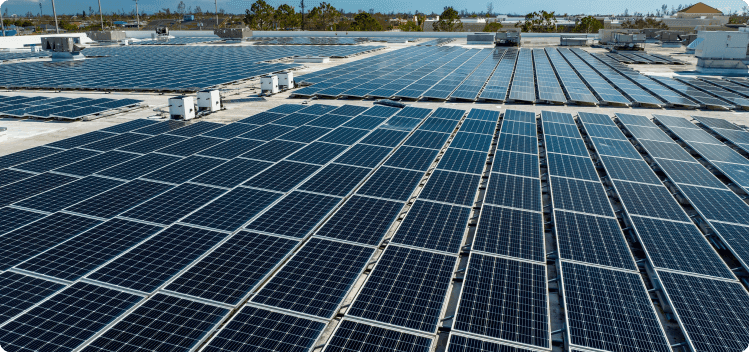
On-site use to reduce energy costs: For hotels, factories, offices and warehouses, storage can retain surplus solar energy for later use, supply additional power during demand peaks or charge and discharge in response to dynamic prices. The appropriate strategy depends on the site's load profile, electricity contract and installed equipment.
Storage alongside solar farms: Borochi storage can be installed as part of a solar farm project. A renewable-only storage arrangement, known in Germany as a Grünstromspeicher, stores the site's solar generation and shifts its export to suitable times. A grid-charged arrangement, or Graustromspeicher, can charge from the grid and operate in electricity markets where the relevant conditions are met. The design must reflect grid connection, metering and trading requirements.
Standalone storage for electricity markets: A Borochi storage project does not need an associated PV installation or substantial on-site demand. It can be used for electricity price arbitrage and, once the technical and market entry requirements are met, for ancillary services.
Suitability depends on the project conditions, not simply the industry. Borochi can help determine the storage power, energy capacity and operating approach based on the load profile, PV installation, grid connection limits and commercial objectives.